
Heading 4
Tangibly Connecting Long Distance Loved Ones
Master's Program, Fall Semester 2024
Timeline
fully individual project
Cycle 1: Research and Ideate
- user interviews
- desk research
- create design goal
- create an interaction vision
5 weeks
Cycle 2: Iterate
- low fidelity prototyping
- user tests
- evaluate prototypes
- choose concepts to move forward with
5 weeks
Cycle 3: Demonstrate
- create final prototype
- evaluate final prototype in real context
- report on evaluation
7 weeks
Design Goal
After conducting 5 initial user interviews, I started with the following design goal:
To enable expats to maintain meaningful connections with their closest long distance loved ones.
Users: expats (specifically international college students)

Research
User Research
What are the usual activities users do with their loved ones in-person?
What activities help them bond with them the most?
How frequent are their interactions with them?
What's most missing in their now long distance interactions?
Sensitivity Workbooks
7 workbooks for initially introducing interviewees to the topic

User Interviews
5 open-ended interviews performed post-workbook. Questions focused on finding out what kind of bonding interactions are missing long-distance.


Post-Interaction Reflections
9 participants completed a survey about their most recent interaction with long distance loved ones.

Insights
After creating statement cards and categorizing quotes from the user interviews and reflections, the following themes arose from the users' pain points.
Quality of current communication
-
lack of physical touch
-
lack of spontaneity and playfulness
-
lack of vulnerability
Process of scheduling the call
-
lack of knowledge of their schedule
-
forget to reschedule if someone forgets a call
Further Research
Expert Interview with a PhD in Family Therapy
I interviewed a relationship therapist (PhD) about love languages and what increases the quality of interactions with loved ones.
Literature Review of Studies on Long Distance Relationships
I reviewed published studies on expatriates and their relationships with their loved ones to find out what common pain points have been reported.
Market Research
After reviewing current products on the market, I realized each of them focused on one love language. I decided a possible ideation route would be combining multiple love languages.
Love Languages
Love languages are a good way for people to make themselves and others aware of how they like to interact
Intimacy Exercises
- breathing exercises
- sitting face to face
- going on walks
social media feels too shallow to foster deep connections
being connected to everyone all the time can be exhausting !
technology used to be household based now it is mainly individualized and one-on-one

Topics of Inspiration for Ideation
Love Languages
How can I include love languages like physical touch, gift giving, and quality time in the interaction with long distance loved ones?
Community-focused
Most meaningful interactions with loved ones today are one-on-one. How can I include an expats' long distance community in the interaction?
Ideate
After completing my initial research, it was time to start ideating.
I began ideating by combining gift giving and physical touch because of the insights from my research. I also decided on these because of the white space for more physical (or non-digital) products for communication.
Endless brainstorm sketching
- lights that display when family members are home
- connecting home aesthetics of loved ones
- connecting loved ones through physical warmth or hugs
- voice messages through a "message in a bottle"

.jpg)
.jpg)
.jpg)
.jpg)
Initial Mockups
The Home Harmony
The HomeHarmony explores having your own mini village of your loved ones. When a house lights up, you know a loved one is home. This helps you to feel connected and visualize your long distance community rather than constantly communicating one-on-one with them. The house lights up when the loved one puts their keys on a key holder connected to the house.
The Touch Sync
The TouchSync explores communicating with
your voice and warmth to your loved ones. The user keeps two hands on it to receive a
message (which they see is there if a light is on). The user can double tap to respond (only once a day).

.jpg)
7 international students participated in 30 minute tests involving:
- roleplaying
- emotion charting initial reactions
- qualitative user interviews
I chose to continue with the Home Harmony because users preferred:
the visualization of their community / multiple loved ones
the comforting "hominess" of the product
the help with scheduling calls with loved ones
Further Testing
I performed small tests to decide what all features to include and fine tune how the user would visualize the interactions. I also hoped to integrate some more exciting features for the users to connect over.
Experimenting with how to represent the time zone difference of long distance loved ones

(4 participants)
"change the outer and inner lights to represent that a loved one is home when it is night time for them"
Adding playful interactions to the house


(8 participants)
"what visualizations or interactions of the house would you want in order to communicate (or mess) with your sibling when they arrive home?"
"what are indicators when you're in your family home that someone has arrived home?"
Final Features

Building the Prototype
Soldering and connecting the neopixels (window lights) to an Arduino
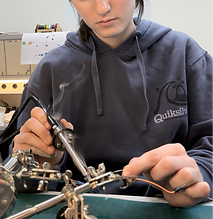
Putting the House together
Connecting phone locations (and the different interactions) to neopixels
(through Arduino)


Evaluation Test
The Setup
The mother, father, and masters student are all connected to the window lights.
The student chose colors for each loved one's window.
The student kept the house for 3 days and took note of the interactions prompted by the house.
Post-Test
- qualitative interview
- collected data on types and quantity of the interactions prompted by the house

Results
Prompted an increase in playful interactions
Home Harmony prompted interactions:
user texted family "look partyy!!" when party lights turned on,
user texted "I thought you guys were going out of town?" when she saw their light on
The house prompted excitement, surprise, and curiosity from the user
The house improved the following pain points:
lack of spontaneity and playfulness
lack of knowledge of loved ones schedules
Next Steps
How might the product continue to provide excitement, surprise, and curiosity to the user for a long period of time?
Further Recommendations
- add a button for the user to turn off the house when they sleep
- add another interaction that allows the user and the loved ones to interact with each other more through the houses (5 second voice messages, ring each other's doorbells)